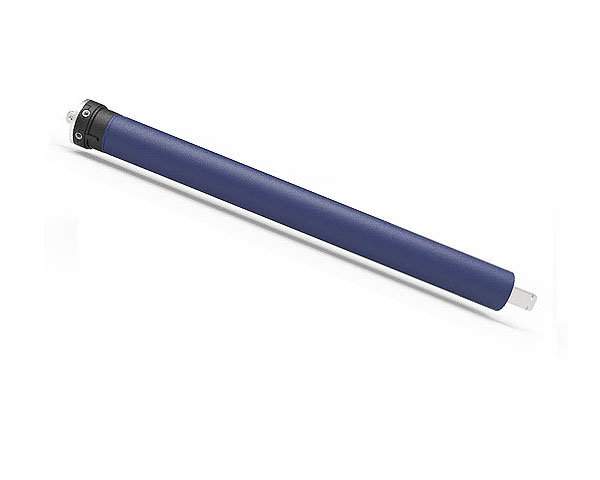
During long-term use, tubular motors may encounter problems such as failure to start, inaccurate positioning, and sluggish operation. Many users are at a loss when encountering such faults and resort to blindly disassembling, resulting in secondary damage. In fact, most common faults can be resolved through simple troubleshooting, and professional repair is not necessary. Below, SCVE has summarized the frequent faults and corresponding troubleshooting methods to help users quickly identify the problem.
Fault 1: Unable to start. First, check if the power supply is normal. Use an electric pen to test if the socket is powered on. For lithium battery models, check if the battery is fully charged and if the charging interface is loose. If the power supply is normal, check if the motor is in an overheating protection state. Some motors will automatically shut down if the temperature exceeds 120℃, and can resume operation when cooled to below 70℃. If still unable to start, check if the remote control or controller is faulty. You can operate the motor manually to troubleshoot the control end issue.
Fault 2: Inaccurate positioning and improper opening/closing. This is one of the most common faults, usually caused by incorrect limit setting or damaged limit switches. Troubleshooting steps: First, reset the limit travel and operate according to the product manual. Adjust the opening/closing limit position through the controller. If the positioning is still inaccurate after resetting, check whether the limit switch is blocked by foreign objects or if there is any wear or damage. Damaged limit switches need to be replaced promptly. Additionally, track deformation can also affect positioning accuracy. Check if the track is flat and, if necessary, make corrections.
Fault 3: The operation is sluggish with a jerky feeling. First, check if there are any foreign objects blocking the track. Clean the dust and debris and then test it. If the track is normal, check if the connection between the motor and the track is loose. Re-tighten the connecting parts. If the problem persists, it might be that the internal gears of the motor are worn out or the bearings are damaged. It is recommended to contact the brand's after-sales service for maintenance. For example, SCVE provides 72-hour rapid response service, which can prevent users from disassembling and damaging the motor by themselves.

Tel: +865726573456 / 6573555

Fax: +865726572570

ADD: Changxing Economic Zone,Huzhou,Zhejiang,313100 China Export Department